
Barack Obama,
a very sharp, intelligent man, extremely manipulative which in his
defense, he had to be to pursue what he did, which was to become the
first two-term president in history in which U.S. military forces had
been at war for all eight years after he ran on bringing peace and
bringing the troops home and all the same bullshit we've heard before,
and just like everyone else, he lied to us. He launched airstrikes and
military raids in at least seven countries: Afghanistan, Iraq, Syria,
Libya, Yemen, Somalia and Pakistan, and escalated the war from 2
countries to 7 during that time. Also he tried to cover up the Fast and
Furious scandal which didn't work out too well. Also helped to
destabilize the region by having Gadhaffi killed which allowed ISIS to
form and become a force to be reckoned with (and this all leads back to
Carter arming the Muhajahideen https://en.wikipedia.org/wiki/Operation_Cyclone
The
left wing media is so blatantly trying to force feed us the agenda of
the corrupt Establishment and when we are able to look back in hindsight
at some of the monologues guys like that cretin Brian Stelter, will be like watching
Joseph Goebbels....these CNN and MSNBC anchors and analysts are modern
day MINISTERS OF PROPAGANDA for the corrupt Deep State and Military
Industrial Complex. Anyone who has the brain power, I urge you to read
the PDF file on the Report on Iron Mountain which was released by FOIA,
as well as researching Operation Cyclone, MK Ultra, and Operation
Northwoods just to get your feet wet and see how the Establishment,
which is made up primarily of the left, is basically just trying to
suppress us all and keep the world at constant war, and force us into
continually electing these career politicians who don't give a shit
about you or your family while at the same time enslaving us in a system where we are forced to work and pay taxes to survive so that our government can pay back the infinite debt we owe to the Federal Reserve System.
The Establishment is corrupt as fuck and they are mostly made up of the Deep State Left, the career politicians who have been there forever and answer to the Elites of the world. They just want more Gov't control over all of us and to take more of our freedoms away. Trump is fighting against that.
The "Elites" of the world as stated above are made up of people from several different groups. They make up what is the Military Industrial Complex. This includes the Bilderberg Group, The Council on Foreign Relations (CFR), the Trilateral Commission,The North Atlantic Treaty Organization (NATO), the European Union (EU), and the United Nations (UN).
Thursday, June 14, 2018

Saturday, March 24, 2018
Muhammad Ali Was Poisoned

They don't say "Parkinson's Disease," because he wasn't diagnosed with it, he was diagnosed with "Parkinsons's Syndrome" which is a collection of symptoms that resemble the symptoms caused by the genetic defect known as Parkinson's Disease.
:::::::::::::::::::::::::::::::::::
A syndrome is a set of medical signs and symptoms that are correlated with each other and, often, with a particular disease or disorder.[1] The word derives from the Greek σύνδρομον, meaning "concurrence".[2] In some instances, a syndrome is so closely linked with a pathogenesis or cause that the words syndrome, disease, and disorder end up being used interchangeably for them.
If an underlying genetic cause is not suspected but known, a condition may be referred to as a genetic association (often just "association" in context). By definition, an association indicates that the collection of signs and symptoms occurs in combination more frequently than would be likely by chance alone.[3]
:::::::::::::::::::::::::::::::::::
The case of Muhammad Ali is absolutely unique. I will provide a list of the most well known boxers who fought in his era at the highest level and took as much, if not much more punishment than Ali at the end of this rant.
If you examine as many boxers as you can, in video interviews available anywhere online, you will notice none of them display the same symptoms that Ali did, nor is their mental decline very similar. Ali was rendered completely silent at a relatively young age for a boxer. The mental decline of almost all of the fighters listed below can be observed through watching interviews of any particular fighter in ascending or descending order. Ali, due to his well known speed and athleticism, height and agility, did not take nearly as much punishment as other boxers in his era, such as "Smokin'" Joe Frazier who had all his wits and was able to speak until dying of liver cancer at age 67, and cases such as "Irish" Jerry Quarry, full blown dementia and an early death. But it's essential to point out that Ali never suffered any form of dementia. He simply lost his ability to speak.
He is seen at age 71 playing chess with former Undisputed Heavyweight Champion of the World "Iron" Mike Tyson here only a few years ago...https://www.youtube.com/watch?v=CJY8YQKFjfo
For a brief period in the late 1980's and early 90's Ali displayed muscle spasms and "shaking" but this only lasted a few years. He is seen numerous times for long periods of time in public completely normal looking, wearing sunglasses, and engaging people with handshakes and maybe a word or two. But he was never seen speaking for long periods of time, and even just a few words caused him much difficulty.
Muhammad Ali was a massive threat to the US Government and the Military Industrial Complex (MIT), as well as other governments across the globe. His anti-Vietnam stance and draft refusal have been publicized and taught at schools in all grades everywhere. His stance that certain white men who had elite power status on the planet were evil and needed to be eliminated was heard by everyone. Once he retired from boxing, he could have very easily run for President of the United States and won in a landslide victory. To say that it is more than likely that the US Government and MIT wanted him silenced is an understatement to a massive degree.
I submit he was very conveniently silenced, but not physically "assassinated." Assassination would have caused a massive uproar and chaos in the country and the world, and would have been extremely obvious. The way it was done was much more sophisticated and meticulous, and less obvious, and took until it was far too late to even speculate about.
* Indicates person is still alive
Joe Frazier (died of liver cancer age 67)
*George Foreman (69)
Archie Moore (had over 200 fights, lived to be 81 years old)
Oscar Bonavena (Killed age 33 gunshot wound)
*George Chuvalo (81)
*Karl Mildenberger (80)
*Brian London (83)
Henry Cooper (Died of unknown illness age 76)
Zora Foley (murdered age 41)
*Joe Bugner (68)
*Ernie Shavers (73)
Ernie Terrell (died from complications with dementia age 75)
Jimmy Ellis (died of complications with dementia age 74)
*Chuck Wepner (79)
Cleveland Willaims (Had total 92 fights. Killed in car accident age 66, no dementia)
Mac Foster (died of MRSA, an infection age 68, no dementia)
Floyd Patterson (died of complications of Alzheimer's and prostate cancer age 71)
Ron Lyle (died from stomach complications age 70)
Jimmy Young (died of heart attack age 56)
Buster Mathis (died of heart attack age 52)
Sonny Liston (died young of drug overdose but never displayed any symptoms into his 50's)
Ken Norton (was in serious car accident after boxing career and cracked skull, remained able to speak normally after being in a coma. Died of a stroke at age 70)
*Larry Holmes (68)
Trevor Berbick (died of drug overdose)
UPDATE
Ali may have been poisoned with something to give him ALS, amyotrophic lateral sclerosis, which is a motor neuron disease in which the neurons for voluntary muscles (In the lungs, heart, kidneys) degenerate and die.
Wednesday, February 7, 2018
Natural Organic Herbs Compared to Multivitamins and FDA Approved Medications
Nutritional Value and Benefits from Organic Herbs you can Purchase At Local Food Stores and Some Pharmacies.
Organic Ground Rubbed Sage (1) :

Organic Cayenne Pepper Nutrition Data (2):
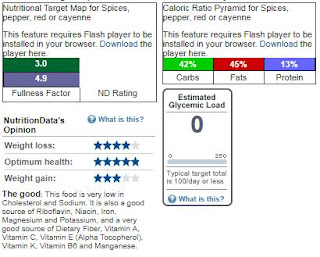
Organic Ground Ginger (3):

Ground Turmeric (4):

Further Reading and Sources:
1. http://nutritiondata.self.com/facts/spices-and-herbs/208/2
2. http://nutritiondata.self.com/facts/spices-and-herbs/201/2
3. http://nutritiondata.self.com/facts/spices-and-herbs/191/2
4. http://nutritiondata.self.com/facts/spices-and-herbs/212/2
https://www.ncbi.nlm.nih.gov/pmc/articles/PMC3535097/
https://www.ncbi.nlm.nih.gov/books/NBK92752/
Organic Ground Rubbed Sage (1) :

Organic Cayenne Pepper Nutrition Data (2):

Organic Ground Ginger (3):

Ground Turmeric (4):

Further Reading and Sources:
1. http://nutritiondata.self.com/facts/spices-and-herbs/208/2
2. http://nutritiondata.self.com/facts/spices-and-herbs/201/2
3. http://nutritiondata.self.com/facts/spices-and-herbs/191/2
4. http://nutritiondata.self.com/facts/spices-and-herbs/212/2
https://www.ncbi.nlm.nih.gov/pmc/articles/PMC3535097/
https://www.ncbi.nlm.nih.gov/books/NBK92752/
https://nccih.nih.gov/health/turmeric/ataglance.htm
Friday, January 12, 2018
Review of the Best Fights of the Year in Boxing 2017, One of the Most Exciting And Historic Years In Boxing
Roman "Chocolatito" Gonzalez vs Srisaket Sor Rungvisai

On March 18, 2017 at Madison Square Garden in New York City, Roman "Chocolatito" Gonzalez from Nicaragua came into the fight as the reigning WBC Super Flyweight Champion with a record of 46-0 after previously defeating Carlos Caudras in a 12 round UD, to face challenger Srisaket Sor Rungvisai (42-4-1, 39 KO) from Thailand. This was only Chocolatito's second fight in the Super Flyweight division after moving up from Flyweight.
The weight difference seemed apparent early on, as Gonzalez was knocked down on a hard body shot while off balance in the first round. He stayed down on one knee collecting himself until the count of 7, and it became apparent immediately how much stronger Sur Rungvisai was at this weight. Sor Rungvisai out muscled him and roughed him up with hard clean shots, and a relentless attack, going punch for punch with Gonzalez throughout the fight. It cannot be ignored however, that Sor Rungvisai committed several fouls including 3 or 4 very bad headbutts that caused severe bleeding from multiple cuts on Gonzalez's forehead and seemed to hurt him. Some of these headbutts did indeed seem intentional, and Rungvisai was eventually deducted a point, to even out the knockdown in the first round. In my opinion, and many others, the referee should have deducted a point earlier than he did.

Gonzalez, although having to overcome the devastating power of his opponent, clearly hurt Sor Runvisai several times during the fight, and landed clean and effective punches that stunned and staggered Rungvisai with good combinations to the head. But despite most of the press scoring the fight in favor of Gonzalez, I honestly had the fight 116-113 with 3 rounds even in favor of Srisaket Sor Rongvisai. It was a fantastic fight, one of the most exciting and dramatic fights I've seen in years that didn't include Floyd, Manny, GGG, Wlad, and all the main major players in the upper weight classes of the sport.


Sor Rungvisai will defend his title against Juan Francisco Estrada (36-2, 25 KO) on February 27th, 2018.
Anthony Joshua vs Wladamir Klitschko

 April 29, 2017. This was just a modern heavyweight classic, championship fight between, at least in my eyes, the true passing of the torch of the Lineal Heavyweight Championship (as a result of Tyson Fury, who defeated Kklitschko a year earlier to win this distinction but then immediately retired instead of taking a rematch) from the long time, dominating Ukranian champion and warrior Wladamir Klitschko to the younger Anthony Joshua of England. The fight had almost everything, knockdowns by both fighters, and critical moments in several rounds where both fighters were hurt and looked as if they could be KO'd any moment. In the end, after fighting back valiantly and like a true heavyweight champion that he has been, the referee stopped the fight during an onslaught by Joshua and Klitschko was stopped in the 11th round. Joshua retained the heavyweight championship and is now set on a course to face possibly Deontay Wilder, the WBC heavyweight champion from the US, who in my opinion is extremely overrated and hasn't been challenged by any notable contenders during his title defenses and is simply a temporary belt holder, or maybe even Tyson Fury who has shown some interest in maybe coming back to fight for the title, which he technically never lost in the ring. The Heavyweight division is exciting again, and the future looks bright.
Gennedy Golovkin vs Saul Canelo Alvarez

 This fight, held on September 16, 2017, as everyone knows, resulted in a bullshit decision. A draw, where GGG was clearly the winner according to almost all experts and observers/fans. The media reaction was immediate and aggressive towards the judges and corruption in Nevada and the sport in general. Judge Adyle Byrd had the fight 118-112 for Canelo which is absolutely unfathomable and so obviously and disgracefully corrupt. Also, the other judge who is not talked about is the judge who scored the fight 114-114, a draw, which is also totally absurd and impossible after reviewing the fight and seeing the real punch stats. The compubox punch stats are never accurate, always inflated for both fighters and sometimes purposefully more inflated for certain fighters. These are claims made by people inside the sport and are widely available to find with a simple search about boxing corruption. Gennedy Golovkin deserved to win this dight and become undisputed Middleweight Champion, but instead he will be forced to have a rematch with Canelo, likely in Las Vegas where he has a chance to be screwed again. Prior to the fight, just about everyone in the boxing community was in agreement that if GGG didn't knock Canelo out, he would be robbed, and that is exactly what happened. The people behind it in my opinion are of course Golden Boy promoter Oscar De La Hoya, who is the modern corrupt criminal Don King of the sport, and likely Bernard Hopkins, who works closely with Oscar and Golden Boy. Not a satisfying result, but a great contest with a lot of good action, but didn't exactly live up to the expectations, which were very high....but still a great fight.
Monday, October 2, 2017
Reaction to the Las Vegas Mass Shooting of October 2nd, 2017. Over 58 Dead, Over 200 wounded.
"Typically, the government selects and grooms the killer (through MK Ultra Monarch Mind Control Program, leaked from the CIA), then uses the murder to promote a political agenda. Sometimes this agenda involves gun control, but often the message involves supposed political terrorism or is an effort to discredit political opponents. "
https://en.wikipedia.org/wiki/Project_MKUltra
https://www.google.com/search?q=mk+ultra+monarch&oq=mk+ultra+monar&aqs=chrome.0.0j69i57j0l4.5761j0j4&sourceid=chrome&ie=UTF-8
https://en.wikipedia.org/wiki/Project_MKUltra
https://www.google.com/search?q=mk+ultra+monarch&oq=mk+ultra+monar&aqs=chrome.0.0j69i57j0l4.5761j0j4&sourceid=chrome&ie=UTF-8
Wednesday, September 13, 2017
Why I Don't Like Touring But Love Recording
Touring and music are two different things. I toured with a well known world-wide act, but I did not enjoy myself because there was hardly any music involved in the actual touring. During rehearsals, it was a lot of fun, because we were just hanging out at the house rehearsing twice a day and actually doing some musical things in between. But once the actual tour started, the vast majority of the time was driving, waiting, sleeping, selling merch. I had no interest in any of those and thus I chose to focus all of my efforts on music composition, recording and mixing, as well as promotion and marketing.
Wednesday, July 5, 2017
Antioxidants, NMDA Antagonists, and Protecting the Heart, Brain and Liver
This is a brief overview of certain natural supplements and vitamins and their positive effects on human health involving cells, organs and systems. Doing your own research is highly encouraged, as this is just an introduction on how to optimally utilize a few specific antioxidants, vitamins, minerals and natural plant supplements that are widely available in North America. I would love to hear any feedback, corrections, additions the reader might have after reviewing this post. I am not a doctor, nor a healthcare professional. I am a human being that takes a passionate interest in how to heal and preserve my cells and vital organs by educating myself on the anatomical, medicinal, and chemical functions and interactions with the information I have at my disposal (taking into consideration that this isn't my profession but a passion I have for learning and being able to retain this information for the benefit of my own health and so I can inform others and help anyone, if I can).
Antioxidants:
First and foremost, antioxidants will protect the brain cells against oxidative damage. Antioxidants also protect other organs such as the liver. This is the main part of this post since most of the damage that results on a cellular level boils down to free radical damage.
First off, a bit about antioxidants. Antioxidants protect cells in the body by neutralizing toxic free radicals. Its necessary to take a mixture of antioxidants because different types of antioxidants protect different parts of the body. Some anti-oxidants are water soluble, some fat soluble. Some anti-oxidants can penetrate membranes easily, some can't. Some anti-oxidants can readily cross the blood brain barrier, others can't.
Vitamin C is a water soluble antioxidant so it neutralises free radicals in the blood and aqueous areas surrounding the cells. Vitamin E on the other hand is a fat soluble antioxidant, so it protects fatty areas of the body such as the walls of the blood vessels. As a result, it prevents the hardening of arteries. Some antioxidants are soluble in both water and fat. Examples are alpha lipoic acid (ALA) and melotonin. Then there are antioxidants which are present inside the cells, and thus protect the cells from the inside. Glutathione is the bodies main endogenous antioxidant which protects the inside of cells. Unfortunately it doesn't get absorbed very well so ingesting glutathione doesn't work. Alpha lipoic acid is an analogue of glutathione which can penetrate cells and thus, protect the cell membrane and inner cell.
Co-enzyme Q10, also known as ubiquinone is a powerful fat soluble antioxidant, and because of its role in cellular respiration, it gets transported to the inner wall of the mitochondria, this gives it the unusual property of protecting the inner mitochondria (an area where protection is greatly needed) from free radical damage. Since the body uses energy from the mitochondria to produce its own endogenous antioxidants such as glutathione, protecting the mitochondria enables the body to produce adequate levels of these endogenous antioxidants. Another antioxidant which protects the inner mitochondria is beta-carotene. Co-enzyme Q10 also protects cholesterol against oxidation. Another powerful antioxidant used in the cellular respiration process is acetyl-L-carnitine (ALCAR). ALCAR protects the outer walls of the mitochondria.
In order to prevent amphetamine neurotoxicity, its essential to take anti-oxidants which can cross the blood brain barrier, and thus enter the brain where amphetamines act. Some powerful anti-oxidants which can readily cross the BBB are acetylcarnitine, alpha lipoic acid and melotonin.
The first antioxidant one should stock up on is vitamin C, because many other antioxidants rely on it in order to function properly. When many antioxidants such as vitamin E neutralize a toxic free radical, they themselves get converted into toxic free radicals, which if left unchecked, would go on to harm cells. Vitamin C on the other hand gets converted into a stable (non toxic) free radical so when an oxidized Vitamin E molecule comes into collides with a Vitamin C molecule, the oxidation chain comes to an end.
Curcumin is a wonder substance when it comes to amphetamine use. Not only is it a powerful antioxidant which has been proven to protect against 6-OHDA damage, it also blocks CREB [12], which is one of the major pathways for tolerance to various drugs. CREB alters ones genes and is believed to play a role in long term changes caused by long term drug use[11]. PQQ is a powerful antioxidant which has been proven to protect against 6-hydroxydopa neurotoxicity.[1]
Melotonin like alpha lipoic acid, is a multipurpose antioxidant which is both water and fat soluble, penetrates cells, and readily crosses the blood brain barrier. Melotonin is a sleep inducing hormone, and can thus help counter amphetamine induced insomnia if taken at night time. Additionally, melotonin has been shown to protect the liver and even help repair liver damage. Melotonin is produced by the pineal gland in the absence of light hitting the retina, so its a good idea to use a blind fold for sleeping in order to maximize melotonin production in the brain.
Aspirin is a good antioxidant which has been shown to protect the brain against amphetamine related damage. It is also an anticoagulant so it helps counteract hypertension (a side effect of amphetamines, among MANY other psychoactive drugs) and prevents strokes and heart attacks etc.
Plant extracts such as grape seed extract and green tea extract are good because they contain a wide range of different anti-oxidants and classes essential nutrients such as flavonoids (nutrients with antioxidant and anti-inflammatory properties), isoflavones, carotenoids, essential fatty acids etc.
One should also know a bit about the bodies own endogenous anti-oxidants in order to know how to keep them at optimum levels. On top of protecting the mitochondria (explained above), another way to boost glutathione is by taking precursors such as acetylcysteine. The bodies antioxidant enzymes use zinc, copper, selenium and manganese so its a good idea to make sure one has enough of these trace elements in their body.
NMDA antagonists:
Another cause of brain damage is glutamate cytotoxicity. This happens when you have a surplus of glutamate in the brain, the glutamate overactivates the glutamate receptors and damages them. The 3 types of glutamate receptors are NMDA, AMPA and kainate.
NMDA antagonists protect the brain against this kind of damage and on top of that, they counteract tolerance to amphetamine. Magnesium is a partial NMDA antagonist so its a good idea to take a magnesium supplement every day. Full NMDA antagonist drugs like ketamine or dextromethorphan (DXM) (in a class of drugs called "dissociatives) can of course be dangerous so shouldn't be combined with other drugs unless you have a wealth of experience and know exactly what you are doing. Memantine is a safer option since it is a partial NMDA antagonist.
NMDA induced neurotoxicity seems to be caused, ultimately by the conversion of nitric oxide (a neurotransmitter released after the NMDA receptor is activated), therefore this kind of neurotoxicity can be prevented by blocking steps further down the cascade. For example, nitric oxide synthase (NOS) inhibitors such as methylene blue prevent NMDA excitotoxicity by inhibiting the cells ability to produce nitric oxide. NOS inhibitors also prevent tolerance to amphetamines. Note: methylene blue is also an MAOI, so it may not be safe to use in conjunction with amphetamines. The best way to block this damage, without interfering with the activity of glutamate receptors would be to block the action of superoxide itself. Co-Enzyme Q10 helps boost levels of superoxide dismutase, a class of enzymes which break down superoxide.
Protecting the Heart and Brain:
Amphetamine use causes some cardiovascular issues, and this can indirectly cause harm to the brain since its the cardiovascular system which carries the oxygen and other compounds needed to keep the brain cells alive and healthy. Thus, it is a good idea to take measures to prevent the risk of heart attack or stroke, and maintain a healthy cardiovascular system. Firstly, as mentioned in the anti-oxidant section, taking the right combination of anti-oxidants will protect the blood vessels. One factor which causes heart problems is oxidation of the arterial walls. Fat soluble antioxidants like vitamin E prevent this.
Oxidised LDL cholestrol also attacks artery walls so taking anti-oxidants like Co-Enzyme Q10 prevents this by shielding the cholestrol. Most people over 20 already have significant amounts of oxidized LDL cholestrol in the arteries, so another class of antioxidant called flavanoids can be used to reverse that. Flavonoids enter the blood vessel walls and dampen down the inflammation. A good flavonoid is quercetin.
Taking vasodilators may be a good idea in order to counteracting amphetamine induced vasoconstriction (especially with unforgiving over-the-counter amphetamines such as propylhexedrine and levametafetamine) Gingko biloba is a decent vasodilator, which also contains powerful anti-oxidants. However, Ginkgo Biloba may not be powerful enough to combat vasodilation of very powerful vasoconstrictors, such as propylhexedrine, cocaine, methamphetamine, etc.) GABA activity induces vasodilation so boosting GABA levels is a good idea. GABA itself doesn't cross the blood brain barrier very well, but its picamilon can readily cross the BBB and boost GABA levels in the brain. Picamilon is basically a molecule of GABA binded to a molecule of niacin, which gets metabolised into GABA and niacin in the brain, so it can be considered a GABA and vitamin B3 supplement. It is an effective vasodilator. Boosting GABA levels will also help prevent glutamate excitotoxicity since GABA and glutamate balance each other out.
In my personal experience, the most effective and fast acting vasodilator has proven to be Cayenne pepper, which can be purchased at any supermarket in powder form, and easily be put into capsules and taken orally in much larger doses than one would prefer to consume while having to taste the firey, mouth burning herb. Even a small amount taken sublingually and immediately washed down with water will have an instant effect on dilating the blood vessels.
Anticoagulents such as aspirin help prevent blood clotting, and thus lower the risk of heart attack or stroke. One should be careful with stronger anticoagulents such as warfarin as they have a greater tendency to interact with drugs.
There are also substances which directly protect the brain against hypoxia induced damage. Racetams such as piracetam and related nootropics protect the brain by enhancing the bioavailability of oxygen to neurons in the brain. Piracetam has been shown to drastically reduce the brain damage incurred by stroke victims, if administered shortly after the stroke. There is also some anecdotal evidence that piracetam counteracts amphetamine tolerance.
Protecting the Liver:
The majority of drug induced liver damage boils down to oxidative damage, therefore antioxidants are the most important factor for protecting the liver. The endogenous antioxidant responsible for protecting the liver against this damage is glutathione, liver damage occurs when the bodies natural glathione reserves are depleted faster than they can regenerate. Two powerful liver protecting supplements one should know about are milk thistle and acetylcystine. Milk thistle is the most powerful liver tonic known to man. It protects the liver against damage and even helps repair the liver. It works by increasing levels of glutathione which is a compound the liver uses to metabolise drugs.
Acetylcysteine is one of the bodies precursors for glutathione so it can used to boost glutathione levels. It is also a potent antioxidant in itself.
Replenishing Neurotrasmitters: Amphetamine causes dopamine and norepinephrine to be released and as a result, it causes these neurotransmitters to get depleted at a relatively rapid rate. The obvious way to replenish them is to take neurotransmitter supplements. To make dopamine and norepinephrine, the body starts with phenylalanine, it goes:
Phenylalanine -> Tyrosine -> Dopa -> Dopamine -> Norepinephrine -> Epinephrine
I think I left out a metabolite or two but they're the ones you should know about. The most direct way to replenish your dopamine is by taking l-dopa. It gets converted to dopamine quicker than l-tyrosine does. However, amphetamine doesn't just deplete dopamine and norepinephrine, it depletes all the neurotransmitters in the metabolic pathway. It also depletes phenethylamine which is another neurotransmitter that the body synthesises from phenylalanine. With this in mind, its a good idea to take phenylalanine supplements so that you replenish the starting material.
Upregulation/Downregulation:
One of the problematic long term changes amphetamine use is the downregulation of various receptors such as dopamine and adrenaline (which are bonded to by both epinephrine and norepinephrine), and transporters such as DAT and VMAT[4]. DAT which transports dopamine back into the cell and VMAT2 which is used to transport monoamines (such as dopamine) in the cells back into synaptic vesicles (the neurotransmitters have to be in these vesicles before they can be released). According to some studies[4] methamphetamine also downregulates the enzymes tyrosine hydroxylase (used by the body to produce dopamine) and tryptophan hydroxylase (used to produce serotonin). Therefore taking substances which are known to upregulate/resensitise these receptors, transporters and enzymes may be a good idea. Long term nicotine upregulates dopamine receptors[3], but of course long term nicotine use may be a bad idea since it is fairly addictive.
Uridine upregulates D2 receptors.[2] Uridine seems to be hard to obtain, an alternative is citocoline which is metabolised into uridine (and choline). Supposedly (I can only find anecdotal reports, if anyone knows of any studies, can you post them) lithium upregulates both VMAT2 and D2/D3 receptors. Lithium of course can cause its own neurotoxicity, so one has to research this in depth before deciding to take it. Lithium orotate is far safer than conventional lithium drugs because it has a very high bioavailability, meaning one can ingest lower quantities of it.
Melotonin has been shown to prevent methamphetamine induced downregulation of tyrosine hydroxylase[8].
Inhibiting Apoptosis:
Apoptosis is a built in self destruct mechanism for cells. Dopamine neurotoxins like 6-hydroxydopamine induce apoptosis, and according to some studies, amphetamines can do this too. So taking apoptosis inhibitors may be a good idea. According to some studies, curcumin protects the brain against 6-OHDA cytotoxicity.[5] Curcumin also protects the brain against ischemia induced apoptosis.[9] Resveratrol is an apoptosis inhibitor, as well as a powerful antioxidant. Red grapes and blueberries are two good sources of resveratrol.
Repairing the Brain
On top of protecting against damage occurring, its likely a good idea to take measures to reverse the damage that has already occurred. Brain Derived Neurotrophic Factor (BDNF) and Nerve Growth Factor (NGF) are two substances involved in neuroplasticity, which help the brain recover from damage. Phosphatidylserine is good for boosting NGF activity. Acetylcarnitine and alpha-glycerophosphocholine (GPC) are two other substances that upregulate NGF receptors. It also enhances dopamine release, so it is a good substance to take during amphetamine withdrawal. I personally find that taking a combination of rhodiola rosea + phosphatidylserine counteracts some of my ADHD symptoms.
Centrophenoxine has been shown to remove lipofuscin deposits from cells, and help repair synapses. Centrophenoxine is metabolised into DMAE and parachlorophenoxyacetate. DMAE also clears lipofuscin from cells and boosts brain function. Lipofuscin is a fatty acid oxidation product which accumulates in cells with age, and excessive accumulation of it has been implicated in Parkinsons disease, Alzheimers and other neurodegenerative disorders, so removing it from brain cells aids the recovery process.
References:
1.) http://www.ncbi.nlm.nih.gov/pubm
2.) http://www.ncbi.nlm.nih.gov/pubm
3.) http://www.ncbi.nlm.nih.gov/pubm
4.) http://jpet.aspetjournals.org/co
5.) https://www.sciencedirect.com/sc
6.) http://www.ncbi.nlm.nih.gov/pubm
7.) www.ncbi.nlm.nih.gov/pubmed/2018
8.) http://www.ncbi.nlm.nih.gov/pubm
9.) http://www.ncbi.nlm.nih.gov/pubm
10.) http://www.ncbi.nlm.nih.gov/pubm
11.) http://www.ncbi.nlm.nih.gov/pmc/
12.) http://www.ncbi.nlm.nih.gov/pubm
Feel free to share any feedback you might have! Any corrections and/or criticism are welcome and encouraged.
Subscribe to:
Posts (Atom)